Art as social practice · Designing for representation, participation & authorship
Much of my work as a designer has involved communicating on behalf of organisations, institutions and individuals.
My social practice turns that relationship around.
Instead of asking how can I represent this community?, I am interested in asking: how can a community represent itself?
Instead of treating people as audiences, subjects or recipients, I look for ways to make them participants and authors.
The projects below explore this through different forms, places and communities.
How can a neighbourhood represent itself rather than be represented by others?
Goondool
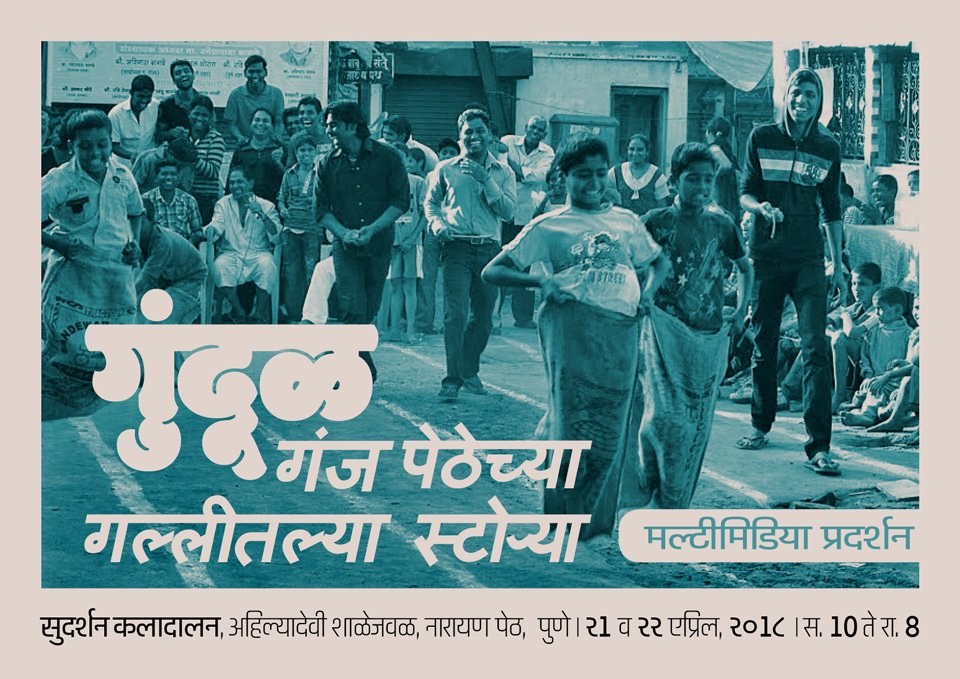
गुंदूळ / Goondool was a culture and anthropology research project that culminated in an Audio-Visual exhibition highlighting the stories of the people, their language, livelihoods and inhabited spaces in Ganj Peth Pune
Working with an anthropologist and the young residents of the neighbourhood, the project used visual research, interviews and writing to look at a part of Pune that is rarely seen within the dominant imagination of what the city is or who a Punekar is.
The research culminated in an audio-visual exhibition that brought these stories into a public space. Rather than producing a portrait of the neighbourhood from the outside, Goondool explored what happens when its young residents become researchers, observers and storytellers of their own surroundings.
My role: Curation · Exhibition Design · Workshop Facilitation
Supported by: Wenner-Gren Foundation, New York
View project →
How can people encounter and participate in art outside cultural institutions?
Bhitti Chitra : Movements in Art
An artclass on the footpath… The project explored what happens when art leaves the gallery, classroom or cultural institution and enters the everyday life of the street.
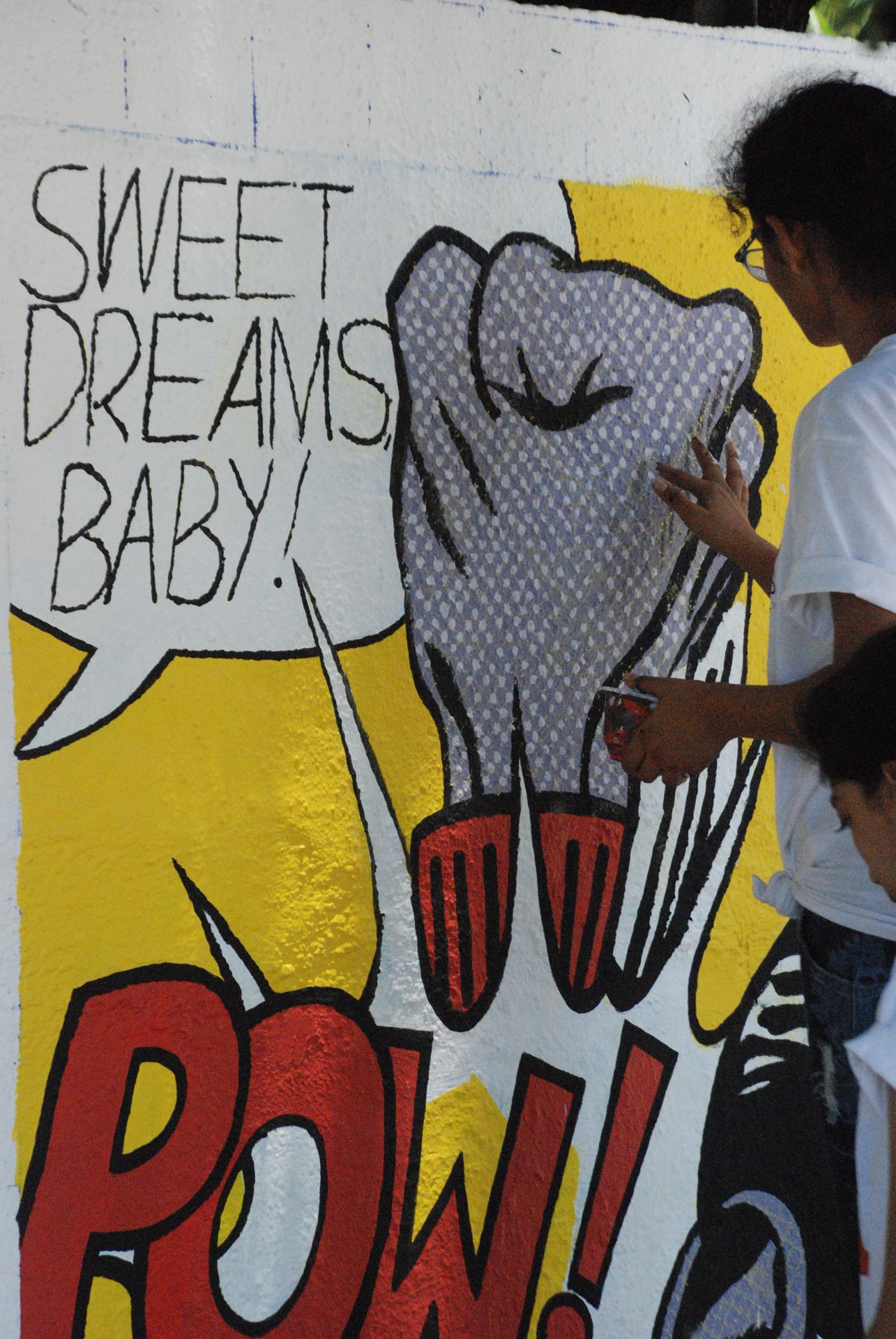
The project explored what happens when art leaves the gallery, classroom or cultural institution and enters the everyday life of the street.
Through community mural-making and participation, the project treated the wall not simply as a surface for an artwork, but as a place for encounter, conversation and collective making.
Bhitti Chitra was an experiment in taking art to where people already are—and in questioning who gets to participate in making art, where that participation happens, and what an art space can be.
The project subsequently extended into SNEHA / EHSAAS youth centres in Dharavi, Wadala, Kandivali and Sion, where young participants developed murals around themes of education, gender and everyday life. The wall became both a canvas and a space for conversation, allowing ideas and experiences to become visible through collective making.
My role: Artist · Facilitator · Curator
Supported by : The Rotary Club of Bombay Sea Coast
View project →
How can community residents research, interpret and author their own narratives around health and social issues?
Comics Epidemic
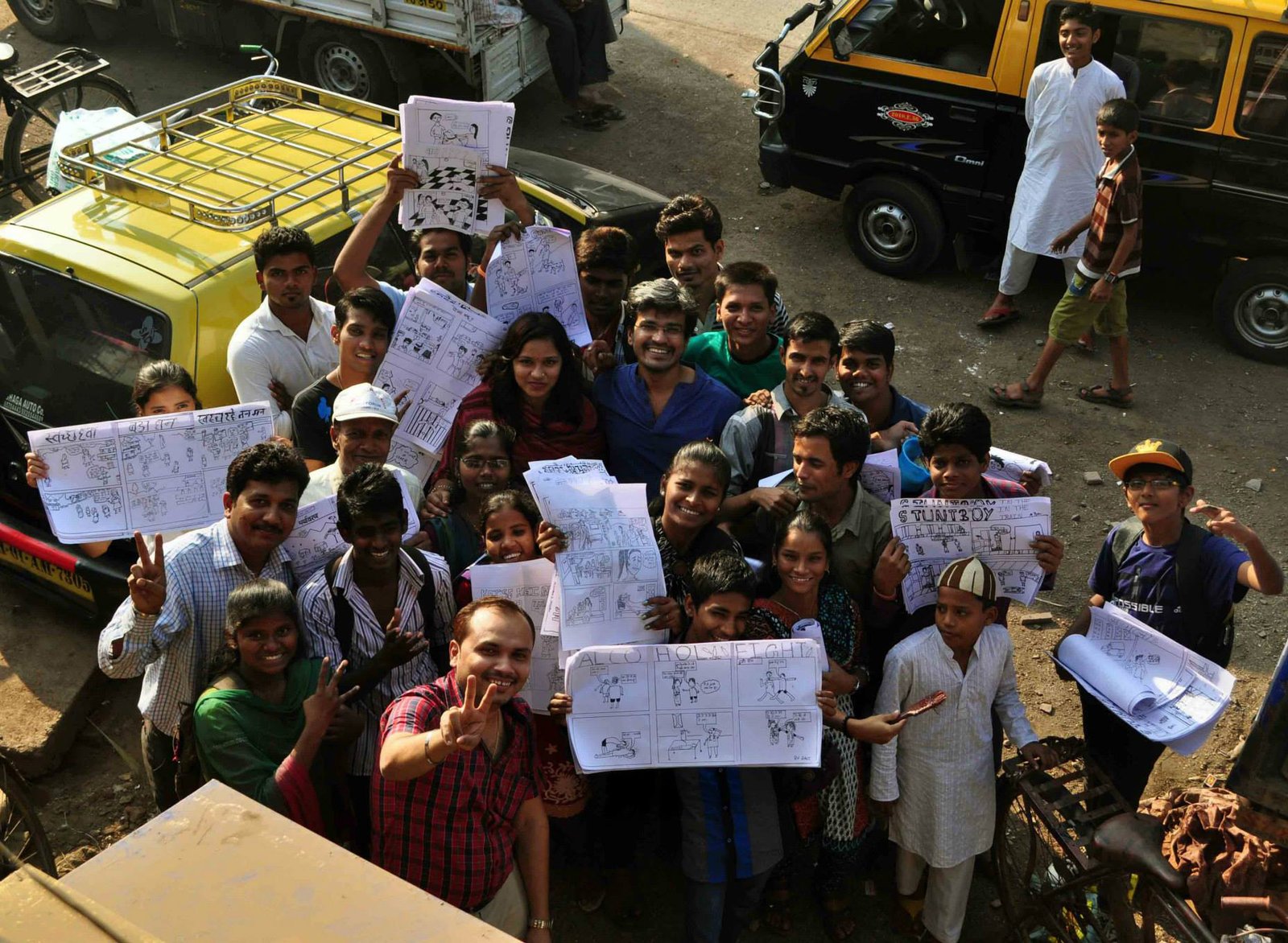
A Community Graphic Novel Project that uses comics as a method of expression, collaboration, research and visual communication.
The project works with community residents to explore experiences and issues using the body as a site; that are often discussed about communities by institutions, researchers or professionals.
Here, comics become a different kind of research tool.
Participants observe, remember, discuss, draw and construct narratives from their own experiences. The process allows complex social and health-related subjects to be approached through images and stories rather than only through conventional forms of documentation.
The resulting graphic narratives become both records of lived experience and acts of authorship.
My role: Mentor · Facilitator ·Curator · Book Designer and Editor
See Casestudy ↗
How can children become authors of communication about their own lives?
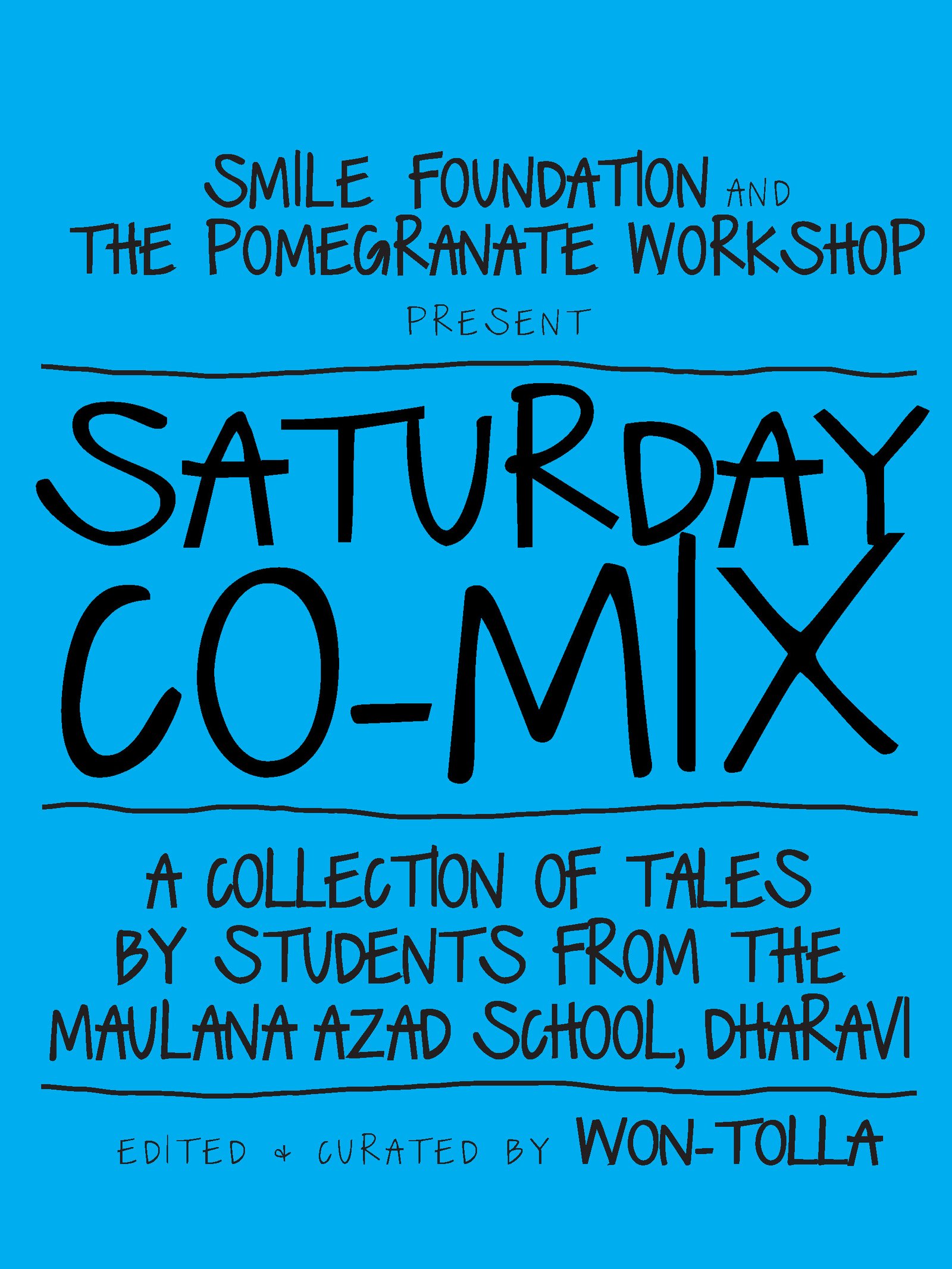
Saturday Co-Mix
Saturday Co-Mix is imagined, drawn and written by students of Grades 6 to 8 at Maulana Azad School, Dharavi.
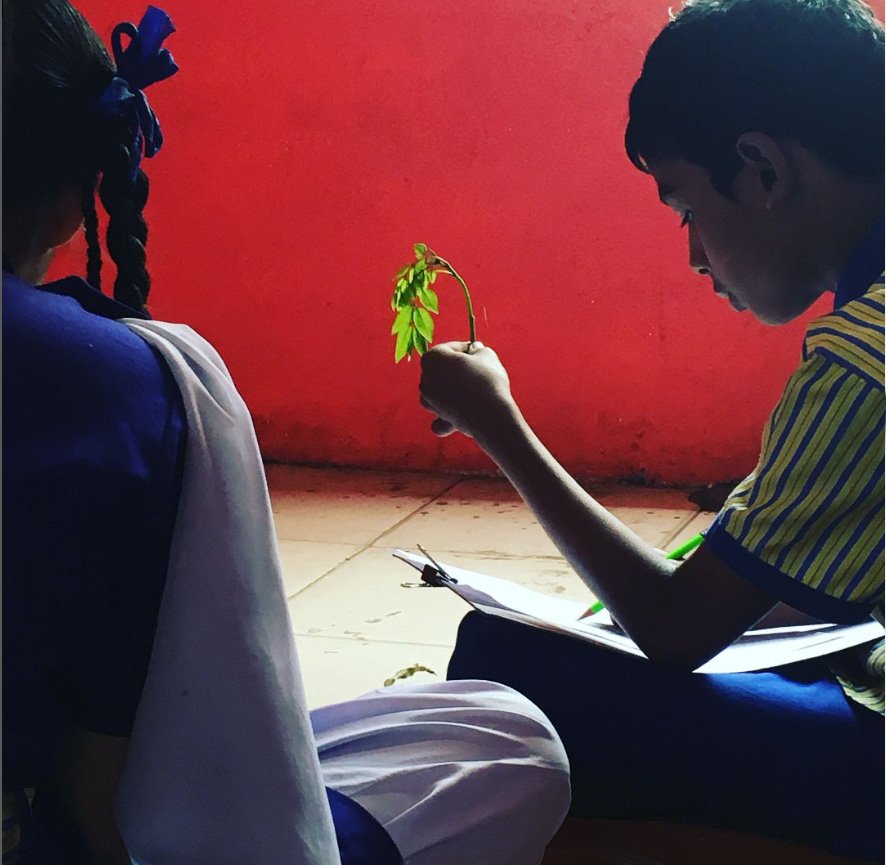
Over three months, the classroom extended into the quiet hours of Saturday afternoons. Students stayed back after school and explored the language of the graphic novel as a space for storytelling, experimentation and self-expression.
The project introduced comics not simply as something to read, but as something to make.
The students became writers, artists and editors of their own stories—deciding what to observe, what to draw, what to say and how to say it.
The resulting work became a collective publication: a space where children’s everyday experiences could become images, words and stories authored by them.
My role: Mentor · Facilitator · Artist
Supported by : The Pomgranate Workshop and The Smile Foundation
Read More →